The Apex of Luxury: Deconstructing the Hermès 50cm Birkin HAC in Ébène Porosus Crocodile
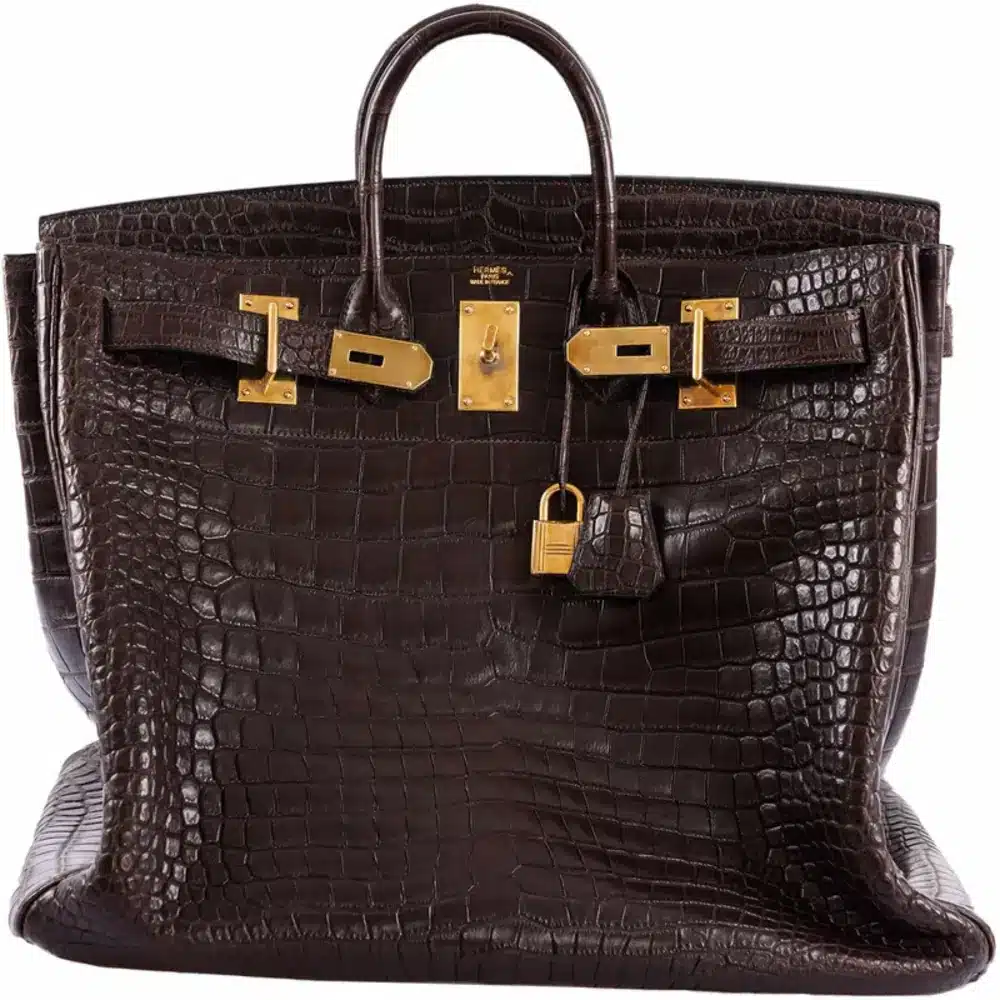
In the elite hierarchy of global luxury, few artifacts command the absolute reverence and mystique of an exotic-skin Hermès bag. At the very pinnacle of this echelon sits a creation that defies ordinary standards of fashion and accessories: The Hermès 50cm Birkin Haut à Courroies (HAC) in Ébène Porosus Crocodile.
Merging the historical pedigree of Hermès’s oldest structural design with the absolute rarest apex leather and a grand, unapologetic physical scale, this rare edition represents the ultimate ceiling of high-end collecting. It is an investment-grade masterpiece, an engineering feat, and a quiet status symbol reserved for the world’s most discerning connoisseurs.
1. The Heritage: The Haut à Courroies (HAC) Ancestry
To understand the 50cm HAC, one must look back to the origins of the Hermès maison itself. Created in 1892—long before Jean-Louis Dumas conceptualized the modern Birkin for actress Jane Birkin in 1984—the Haut à Courroies (translating literally to "high belts") was designed as a functional piece of equestrian equipment. Its original purpose was to securely transport a rider’s saddle and riding boots.
The structural blueprint of the HAC serves as the direct stylistic ancestor to both the Kelly and the Birkin. However, the HAC retains distinct architectural proportions:
Taller, majestic body lines compared to standard travel or daily-use Birkins.
Shorter, sturdier handles designed to balance the physical weight distribution of a heavy-duty carryall.
An imposing 50-centimeter span that transforms the bag from a handbag into a supreme piece of luxury luggage.
While standard Birkins are frequently produced in sizes 25, 30, and 35 centimeters for daily wear, the 50cm HAC places the design back into its original context: grand, uncompromising travel.
2. Porosus Crocodile: The King of Exotic Leathers
What elevates this specific HAC edition into the stratosphere of rarity is its material: Porosus Crocodile (Crocodylus porosus), widely acknowledged as the most prestigious and expensive exotic skin utilized by Hermès.
Sourced primarily from saltwater habitats in Northern Australia and Southeast Asia, Porosus skin is instantly identifiable to the trained eye by two definitive markers:
The Scale Pattern: The belly scales are remarkably symmetrical, tight, and fine, transitioning smoothly into smaller, rounded flank scales.
The Circumflex (^): Stamped discreetly next to the silver or gold Hermès Paris foil logo, the caret symbol denotes the use of Porosus saltwater crocodile.
The Lisse Finish and Agate Polishing
On this rare edition, the skin is treated with a shiny (lisse) finish. Achieving this mirror-like gloss requires an intensely rigorous, traditional artisan technique. Skilled craftsmen manually polish the skin using a genuine agate stone. The friction of the dense stone compresses and seals the natural grain of the crocodile leather, creating a brilliant, glass-like sheen that catches light dynamically without losing the organic depth of the hide.
3. The Colorway: Ébène and Hardware Harmony
The aesthetic soul of this 50cm HAC lies in its color profile: Ébène (Ebony).
The Tone: Ébène is a profound, multifaceted dark brown. Unlike stark black, which can sometimes appear flat or severe on a massive 50cm canvas, Ébène acts as a warmer, richer alternative. Under direct light, it reveals deep cocoa, espresso, and charcoal undertones.
The Versatility: This rich neutrality ensures that despite its massive size, the bag maintains an aura of understated elegance rather than loud ostentation.
The Hardware Pairing: Depending on the specific iteration, this edition is accented by either sleek Palladium hardware or rare, unconventional bronze-toned hardware. Bronze hardware, utilized only sparingly by the maison, melts seamlessly into the earthy warmth of the Ébène crocodile scales, creating a cohesive, tone-on-tone aesthetic that appeals heavily to elite collectors.
4. The Engineering Challenge of Scale
Crafting a 50cm exotic bag is a task that pushes even master artisans at the ateliers in Paris to their limits.
Skin Yield Limitations: A saltwater crocodile of sufficient size to yield flawless, unblemished skin panels large enough to cover the front and back faces of a 50cm HAC is exceptionally rare. Sourcing symmetrical matched panels for a single bag requires combing through years of leather inventory.
The Solo Artisan Tradition: True to Hermès tradition, a single artisan constructs the bag from start to finish using signature saddle-stitching techniques. Managing heavy, stiff crocodile leather across a 50cm structure demands immense physical strength, spatial precision, and decades of apprenticeship.
5. Collector's Status and Market Value
Within the secondary luxury market, large-format exotic HACs anchor the pinnacle of the men's and luxury travel segments. While standard leather travel bags command significant sums, an exotic Porosus edition of this size represents the absolute ceiling of the category.
Because Hermès allocates virtually zero production slots for 50cm exotic HACs to general boutique clients, these pieces almost exclusively exchange hands through private collector networks, high-end auctions, and elite secondary dealers. Pristine examples regularly command six-figure valuations (often exceeding $150,000 to $165,000 USD depending on the hardware and condition).
Final Verdict
The Hermès 50cm Birkin HAC in Ébène Porosus Crocodile is far more than an oversized luxury accessory. It is a convergence of 19th-century equestrian heritage, uncompromising French craftsmanship, and the rarest materials known to the fashion world. For the collector, it stands as the ultimate crown jewel—an unrepeatable monument to the art of luxury


Comments
Post a Comment