The Art of Leather Marquetry: An In-Depth Exploration of the Limited Edition Hermès Kellygraphie “Lettre H” Bag
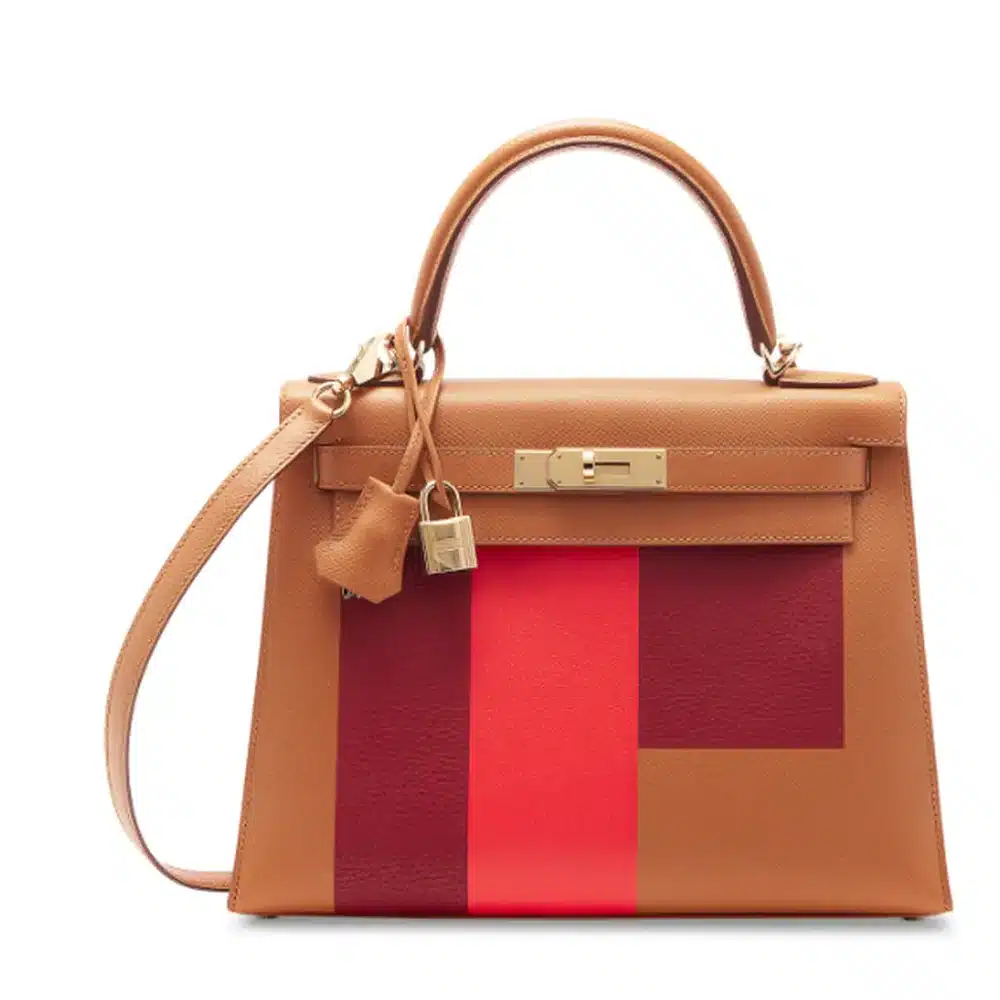
Few names in the luxury ecosystem command the revered status of Hermès. Among its pantheon of timeless design—anchored heavily by the Birkin and the Constance—the Hermès Kelly stands alone as a masterclass in architectural elegance, equestrian heritage, and meticulous craftsmanship. Originally introduced in the 1930s by Robert Dumas as the Sac à Main de Voyage, the bag later achieved immortal status when Grace Kelly, Princess of Monaco, used it to shield her pregnancy from paparazzi.
Decades later, Hermès continues to push the boundaries of its own storied legacy through rare, highly coveted limited-edition variations. Among the most brilliant and mechanically ambitious of these iterations is the Hermès Kellygraphie “Lettre H” Bag.
1. The Genesis: Archival Artistry and "Mademoiselle D"
The story of the Kellygraphie collection begins far away from modern Parisian runways, tucked deep within the historic archives of Rue du Faubourg Saint-Honoré. For the resort collections, Hermès design teams unearthed a series of striking, avant-garde alphabet sketches dating back to the 1930s. These geometric, highly stylized letterforms bore the signature of an enigmatic artist who signed her work simply as “Mademoiselle D”—a figure whose true identity remains shrouded in mystery, adding an irresistible layer of romance and provenance to the bags.
Nearly a century after these illustrations were first rendered, Hermès decided to translate Mademoiselle D’s typography into physical form. The result was the Kellygraphie series, a limited-edition run of Kelly Sellier bags featuring individual letters that, when placed collectively side-by-side, spell out the sacred marque: H-E-R-M-E-S.
Among the letters of this bespoke alphabet, the “Lettre H” holds a special, almost symbolic weight. As the foundational initial of the house name, the "H" transforming the facade of a Kelly Sellier is both an homage to history and a bold celebration of graphic modernism.
2. Architectural Mastery: The Craft of Leather Marquetry
What sets the Kellygraphie “Lettre H” apart from standard or even exotic Hermès leather color-blocking is the painstaking technique required to construct it: leather marquetry.
Unlike traditional appliqué—where patches of leather are layered and stitched on top of a base panel—true leather marquetry requires master artisans to cut separate pieces of leather with microscopic precision and inlay them flush against one another.
For the Kellygraphie “Lettre H” (typically executed on a Kelly 28 Sellier structure), the front panel is a structural puzzle:
The Base Frame: The main body and rigid Sellier borders are crafted from one specific leather and color (often Vert Cypres or Gold Epsom).
The Vertical Bars: The two vertical pillars of the "H" are precision-cut and seamlessly embedded.
The Crossbar: The horizontal bridge completes the letterform, flush-set to ensure that running a finger across the face of the bag yields a completely smooth, uniform plane.
The precision required is staggering. Because leather is a natural, dynamic material that expands, contracts, and reacts to humidity and tension, achieving seamless joins without puckering or gaps requires a level of artisanal mastery possessed by only a handful of craftsmen in the world.
3. Textural Symphony: A Masterclass in Material Contrasts
Hermès could easily have used a single leather type for the marquetry puzzle, relying solely on color shifts for visibility. Instead, the house elevated the Kellygraphie “Lettre H” into a tactile journey by combining contrasting leathers, each with its own finish, grain, and physical behavior.
A classic configuration of the “Lettre H” showcases a triumvirate of distinct textures:
Epsom Calfskin (The Body): Pressed and highly rigid. Epsom leather is known for its cross-hatched, pressed grain, lightweight nature, and exceptional scratch resistance. It provides the crisp, unwavering structural integrity necessary for the sharp lines of a Kelly Sellier frame.
Sombrero Calfskin (The Letter Verticals): Sombrero is a smooth, matte calfskin with a completely uncoated, natural surface. Unlike glossy leathers, Sombrero absorbs light rather than reflecting it. This light-absorbing quality creates a striking visual depth, ensuring the vertical columns of the "H" stand out boldly against the background.
Clemence or Chèvre Mysore (The Crossbar): Often featuring a looser, tumbled grain (such as Clemence) or the dense, resilient grain of goatskin (Chèvre), the crossbar provides a subtle variance in texture and warmth, playing tricks with the eye and catching light differently from various angles.
Paired predominantly with cool-toned Palladium hardware, the entire composition manages to look simultaneously futuristic and deeply vintage—a bridge spanning the Art Deco sensibilities of the 1930s and modern luxury design.
4. Rarity, Collectibility, and Market Value
By its very nature, the Hermès Kellygraphie collection was produced in exceedingly limited quantities. Because of the intensive labor hours, high failure rate in cutting complex leather marquetry, and the specialized skill set required, these bags were never mass-produced. They were distributed selectively to VIP collectors, and certain color combinations or retired shades (such as Malachite accents) have made them virtually impossible to source at retail.
On the secondary luxury market and among elite auction houses (such as Christie's, Sotheby's, and specialized collectors like JaneFinds), the Kellygraphie “Lettre H” trades as a blue-chip collectible. It occupies a unique space alongside other legendary artistic iterations like the Kelly Doll, So Black series, and Feuillage cut-work bags.
For collectors, owning a Kellygraphie "H" is not merely about possessing a rare handbag; it is owning a physical manifestation of Hermès' archival heritage. It represents the intersection where saddle-making heritage meets fine art, proving once again why Hermès remains the undisputed titan of the leather goods world.


Comments
Post a Comment